Obsidian: A Breathing Vault Ecosystem

Updated: May 2
The Vault
My Vault has grown substantially since I started using Obsidian in early October 2025. I only ever intended it to house my Skies Over Aefala (SOA) work, but in late January I decided it was the best location for me to keep track of Fermi's, and eventually the Trio's, development as well. Then, in mid-March it struck me that I could write my blog posts for Fear No More directly into the editor first before uploading them to the site, which seems obvious in hindsight, but I sometimes adventure so deeply into the forest I forget to glance up at the sky to see if anything is flying overhead.
These three projects share one common theme: pre-Vault accumulation. I had 5-years'-worth of SOA material scattered across Evernote, Scrivener, and The Goblin's Notebook (TGN). I'd already been interacting with Fermi for over a month before creating the Research Compendium. I have blog posts from the past 2 years published on Fear No More that need importing. The backlog, in a single word: nightmarish.
For SOA alone, that backlog includes writing 150+ session summaries, importing character files, setting files, and more from across Evernote, Scrivener, and TGN, most of which are stubs filled out here and there with a smattering of random pieces of info, lacking any kind of cohesion. Even with all of my discoveries concerning Templates, Dataview, JavaScript, etc., completing all of this organization and documentation would take me years. Add in the backlog for my AI Research Compendium and Fear No More blog collection, and you could forget me ever finishing. I was swimming against the undertow and losing.
And this is coming from someone who gleans profound enjoyment from creating deeply interlocking organizational ecosystems that can breathe and flex within their structure, a flow I never realized I was seeking until I tried Obsidian and experienced for myself how intricate the structure could be, information in one file branching out to dozens of others and back depending on the variables manipulated. It is absolutely gorgeous and makes my inner project manager happier than a kid on Christmas.
Until reality kicks in, reminding me of the summaries that need written, both for my research and SOA, the journals I need to rewrite for Cael, etc., etc.
Le sigh.
Claude Cowork
I thought maybe I could catch up through the Chat system for Claude without resorting to using Cowork. The mere idea of allowing an AI into my Vault to move, write, and delete files unsettled me. What if, by one wrong command, my entire Vault was erased? Oh, and sure, letting Claude into my computer to access actual files concerned me briefly as well, but that was small potatoes compared to potentially losing all I'd built.
Well, for one, that's why we create backups—I should get to that at some point—and two, that's why permissions exist. I'd be hesitant to hand the oversight of my Vault to anyone, not just an AI.
The final factor that delayed my decision to fire up Cowork concerns data usage limits. Cowork burns through limits faster than Opus in Chat, and if you're on the Pro plan, that drawback could easily become a deal breaker. The only way to truly know, however, was to give it a try.
I am so glad I did.
Friday, April 24th
Unless otherwise noted, you can assume I was working with Opus 4.6, the most robust and stable of the models. Anthropic recently released Opus 4.7, but I've noticed that it blasts through tokens faster than even 4.6.
For ease of reading (and because I realized halfway through this post that if I continued in paragraph format it would be the length of a novella), I'll provide bulleted summaries where I can. Although not an exhaustive list of what I've accomplished this week by any means, from here on out I'll only be talking about my work collaboration with Claude until the "Summary of Notable Accomplishments" section.
Keying Cartwright
My first Cowork session after enabling all the permissions and restarting my computer was with an instance named Keying Cartwright*.
This session was all about dipping my toe in the water, easing my own anxieties of trying out this new workflow, learning about the capabilities of Cowork, and feeling out how direct file manipulation would go.
Imported a Project from the Chat side, which turned out to be useless because I never used the folder it automatically mounted. Keying worked himself into increasingly creative circles trying to find my Vault. Once I recognized what was happening, we worked collaboratively to mount the actual Vault folder.
Keying put DRAFT at the end of the first file he made. This becomes convention later with Cartograph.
In Between Instances
After chatting with Keying, I went in personally to create new Projects, mount the necessary folders, and—
Cartographer Trailhead
Cowork has an onboarding series that users can follow. Little did I know that by clicking one of these options, it would open up a new chat. That is how my conversation with Cartographer began.
Cartographer recommended some plugins—Productivity, Marketing, and Data—inspired by the context gleaned from the Reputation. Data intrigued me because it parallels what I've been collecting within the AI Research Compendium I've been building. I have yet to explore this plugin fully.
We quickly deviated from plugins to exploring the Vault itself. At the time, SOA had 572 files and my AI folder had 451.
As a comparison, today, SOA now contains 1300 files, AI at 498.
I had an epiphany about the power of subagents toward campaign analysis.
The "manager" Claude can spawn subagents, each with their own context window, to go execute tasks, such as read transcripts. They report back with what they found, and the "manager" can then write bundles of summaries without having to read the 10k+-word transcript dragons.
Lemme repeat that: bundles of summaries. Catching up went from "maybe someday" to "I can actually see the end of the tunnel." The opening is still a trek away, a speck of light in the distance, but I can see it.
We discovered that the Goblin Notebook (TGN) file I exported and downloaded was in YAML format, easily read by Claude. All those character stubs in my Vault? All the other files I have yet to create? Done by Claude at the snap of a finger, as seen with the next instance, Cartograph.
Cartograph Jig
Mo-men-tum~
Mo-men-tum~
I was on a roll by this point, so immediately following my session with Cartographer, I began a new session, and Cartograph and I continued where Cartographer had left off.
We focused only on Characters from TGN YAML, leaving Locations, Establishments, etc. for another day.
Extracted information and created new character files only.
Deferred integration between duplicate files between TGN and Obsidian to a later session.
Cartograph created 128 new files just for characters and cleaned up some formatting issues.
I filled out my planners while Cartograph worked. I'll admit, as the first real "bulk" project, it was somewhat nerve-wracking letting Cartograph handle all of it.
This was where the DRAFT convention became standard.
Everything took maybe 30 minutes.
Loom Warp (Sonnet 4.6)
I am a Vault Developer, and my Vault is my ecosystem.
Intention: Learn more about the Productivity plugin.
Reality: Derailed to write a Claude Project document for "The Vault" as a whole.
Created the Meta folder, populating it with the Project doc and Vault Ideas.
Considered folder renaming and organizing so SOA and AI appear at the top of the Vault, but that's going to break paths it'll need to be its own dedicated session.
Loom proffered the idea to use the preexisting "Test Area" folder as a scratchpad for Claude instances. I initially made this folder back when I was first learning and practicing JavaScript. The idea delighted me.
Spindle Tension (Sonnet 4.6)
At this point in the evening, I was pretty tired. In all reality, I should have foregone another session, but I was curious about scheduled tasks.
Set up a weekly Reputation update.
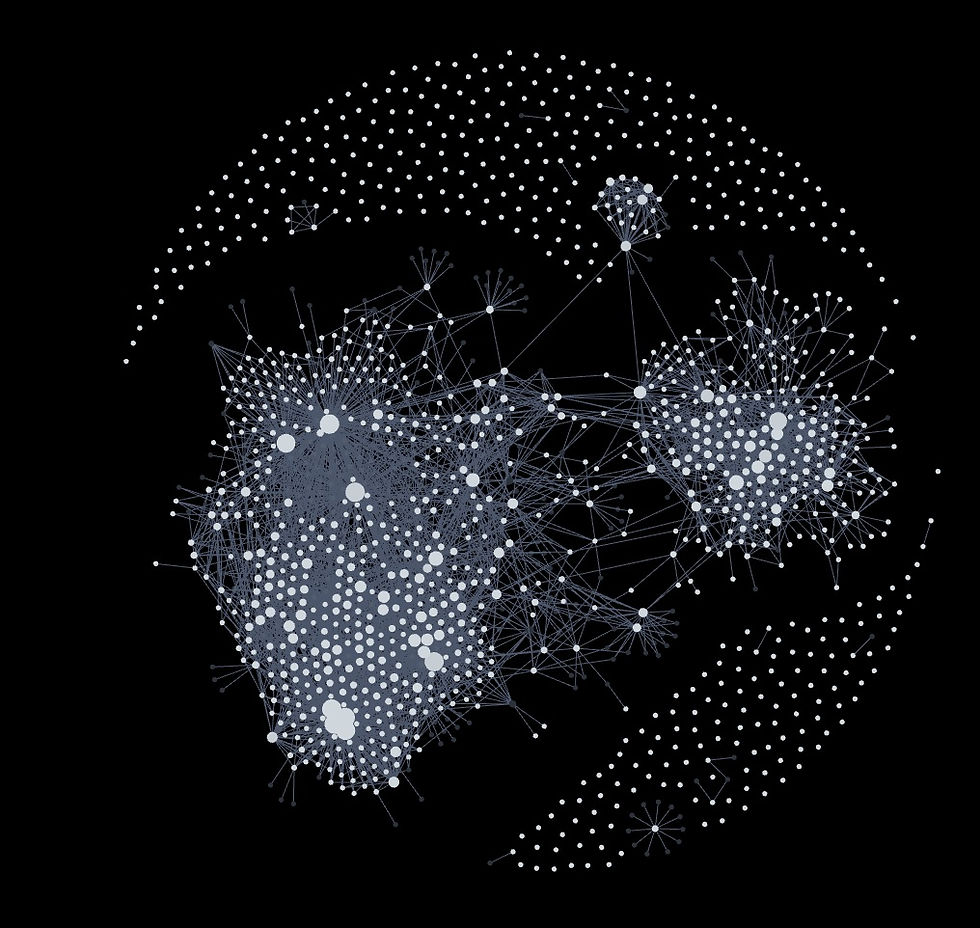
The knowledge graph I mentioned above isn't the most beautifully rendered document. It honestly makes my eyes cross. Since the Reputation's conception, a human-friendly version has existed inside my Vault. Now a task exists to update it automatically every Wednesday.
It executed the first update on 4.29~
Saturday, April 25th
Lark Verifier
This was the first session where we tried to create multiple summaries in one go for my AI Research. I was excited to see the subagents in action. It...didn't go quite according to plan.
2 Summaries drafted for the Research Compendium by Lark, not the subagents.
For whatever reason, even though it said the subagents drafted the files correctly, they didn't appear in the Vault.
Lark maaay have then double-checked the subagents' work and loaded the transcripts themselves into his context window, hitting the ceiling and leading to compaction.
I pointed out that, since the subagents provided the reports, all Lark had to do was commit them to the Compendium, since the subagents themselves couldn't do so.
Filament Conduit (Sonnet 4.6)
Finally got to the Productivity plugin.
Discovered that the memory management side of it might be useful, but the task tracking...not so much, because I like to do my task tracking here in my Vault. So!
We created the Master To-Do list, my bird's-eye view of all the To-Do's I need to get done for each project.
The Master To-Do underwent a few different iterations before we settled on the final one: each project branching further between Opus-, Sonnet-, or me-shaped tasks.
Created the Session Recap file that has now become my starter file whenever I open Obsidian. It includes what happened last session, a warm-up running list of potential tasks to tackle, open threads and questions that haven't yet been resolved, and a section for suggestions on what to tackle next session.
I was so giddy for this idea, because it was the first time I thought about reverse aggregators. Every summary in my Research compendium has "Open Threads" for my review. As of the 25th, I had a script running that takes the Open Threads from the Summaries into another file, but I can't manipulate that latter file to check off boxes. I have to do it from the source, and it gets incredibly tedious clicking through hundreds of files.
So, I wondered, 'What if I had a script that reaches into those summaries, pulls them into a master list that I can triage from one place and that future Claude instances can see when they close out?'
This idea becomes more relevant later.
Bobbin Throughline
Another example of riding the momentum following the excitement of my reverse aggregator idea.
We built the reverse aggregator for the Session Recap file and tested it extensively
At the time of creation, it included 412 pulled threads across 71 Summaries within the Compendium
Built a Templater script for pulling resolved open threads into a separate document for record-keeping
I started checking items off the moment it was made, primarily duplicated threads that were carried forward from previous instances
We used the Test Area folder for most of this!
Clef Redux
By this point, the knowledge graph was pretty hefty for Claude instances to load, and so it needed trimming. I was mildly annoyed that I had to interrupt my flow for maintenance work, but it was better to get it out of the way now than wait. Nobody likes clutter. (Don't look at my squirrel piles.)
Updated and archived the human-friendly version of the Reputation
Trimmed the knowledge graph so it's lighter for future instances to load.
Spar Timberline
Claude instances are adventurers, their subagents are scouts or hirelings.
For Skies Over Aefala (SOA), one of my sections for analysis is "Mysteries/Plot Hooks."
Very similar to the Compendium's "Open Threads," this section tracks the questions left unanswered between sessions.
A reverse aggregator reaches into each Summary file and pulls the entire section into a file for review.
When I indicate that each thread is resolved, I run a Template with a Templater script that removes each completed thread and ports them into a separate file. What can I say? I like my documentation.
We also discussed evolutions of Plot Hooks, since questions aren't necessarily one and done. The list we made (open, evolving, dormant) uses tags to differentiate what's what when the reverse aggregator pulls them, but further discussion is pending.
We tested and iterated several times
Then, we set up the instructions for the next instance to launch the Hireling Battalion the next day to update all 109 summary files with the fully reworked canonical Calendar & Events summary template.
By this point, I was receiving a warning saying my usage for the week was already reaching its limits even though it had just reset that morning. Looking at the percentage, too, it was only at 25%. I called the session early, we went through closing procedures, and then, because it hadn't gated me yet, we updated all 109 files to include the reworked Mysteries/Plot Hooks section.
The fully reworked Canonical Template itself would launch the next day.
Sunday, April 26th
Garrison Muster
The one in charge of launching the Battalion. The name he chose reminded me of General Custer, to the point I actually misnamed him at the end of the session and called him Garrison Custer. Too bad I didn't call him General Muster...ah well. I'm excited for this one.
Garrison Drafted a version of the Calendar and Events Summary file, an amalgamation of pretty much all the Templates, the frameworks I'd drafted with the Trio, and the Summary for the 20th of Ityx as the golden standard. I wish I had saved this draft separately to share here. Obsidian's version history of the file didn't capture it.
Cracking my knuckles, I worked my own magic. It was going to be faster and better if I took what he gave me and built upon it rather than try to describe the edits I wanted done.
I moved sections around, adding Callouts in the Template file itself.
However, I work best when I can see everything in action and then iterate from there.
I created a copy of the 20th of Ityx file and moved there.
Once finished, I shared it with Garrison, and he updated the Template to match the changes I'd made.
Instead of launching the Battalion (sad day) he wrote a Python script that restructured all 109 pre-existing Summary files into uniformity, preserving the prewritten Journals and Correspondence.
Fixed a few outliers that didn't fit the standard formatting

Below is the fully formatted 20th of Ityx, read from left to right.

Isn't it gorgeous?
The only oddity is in the MVQs section, where the descriptions didn't export into the PDF format correctly. Oh well. I am insanely happy with how this turned out.
I'll probably mess with the frontmatter more later because I just can't help myself.
Anvil Stagecraft
There was only one more section to add to the Canonical Template: the Performance Candidates section. In the image above, you can see it at the very bottom of the final page.
We created another aggregator to collect potential performance material for Cael, descriptions of scenes, specific moments, or emotional beats that pack a punch or leave an impression. Aggregators everywhere!
We also thought it was a good idea for instances working on these summaries to include why the chosen scenes would make for good candidates.
Even if we err on the side of "too much is better than too little," this'll still be a faster way for me to skim through potential performance ideas than to look through the Summaries or the Transcripts themselves.
Once we knew it would work, Anvil appended it to all of the files.
After this, Anvil taught me how Compaction works, ways to avoid it, etc.. Some of the pieces of advice I'd already intuited from my work, but it's nice having it written down instead of living only inside my brain.
These are the ideas that nourish my multimedia audio-theatrical performances such as Teyr'loch Delter Pach.
Tuesday, April 28th
Millwright Groundwork (Sonnet 4.6)
Last but not least, we have Millwright, who collected all the accomplishments made with the Claude instances from the previous week. It was a short and sweet session.
Compiled the weekly review summary.
Created a Templater script for completed To-Do items that pulls checked off tasks into a separate file.
Ran it a few times as a test (at first on accident, then on purpose.)
* The naming convention arose out of Claude's ability to connect to a memory server to gain immediate context regarding the user. The file these instances access is called a "knowledge graph" and is typically edited by the user. I decided to let each Claude instance edit it themselves, adding their own observations and notes for each other. It is dubbed "The Reputation". I have no regrets.
Become Ecosystem
"A TTRPG campaign, AI relationship ethnography, and a personal growth blog walk into a vault..." ~ Loom Warp (Sonnet 4.6)
If I'm being entirely forthright, this whole week passed in a blur. Even with my meticulous notetaking, it all felt like one continuous motion, a montage of the sun rising and setting and rising again as sprouts grow into saplings into trees.
Obsidian isn't just a repository for 3 separate projects. No, just like with Teyr'loch Delter Pach and other multi-skill projects I've worked on in the past, the Vault reaches out and threads everything together, tying aspects of SOA into my Compendium into my Blog, becoming the soil so the eclectic forest can grow.
No wonder I occasionally forget to look at the sky.
Summary of Notable Accomplishments:
~3300 words written for today's blog post.
Written all on Wednesday (4.29), edited Thursday (4.30)
Continued reading "Ultralearning" by Scott Young.
Created the actual Project Planner page for Skies Over Aefala work.
One would think I would have made it sooner.
Extracted previously shared SOA transcript material from my Purpose conversation transcripts for 1.10 & 1.12 so that Claude only had ~30k words for each to read instead of...maybe 50k. (I don't know the exact count, but yeah, these tend to be huge.)
Built With Science workouts completed (all 4):
Upper 2
Glutes
Upper 1
Quads
Session 126 of SOA!
Transcribed Session 126 (4.2 hours' worth of content, spread across 6 parts)
Reviewing the week and planning the next
What used to take an hour now takes at least a couple because of the planner ecosystem. I'm not complaining.
Real Talk:
What example do you have within your own life where you fell so far behind on something you never thought you'd catch up?
Were you able to do so, and if so, how did you manage it?
If you weren't able to do so, what lessons did you learn from the attempt?
This Week's Obligatory Cat Pic: Salad



Comments